


Most WordPress security plugins are sold on fear, bought on autopilot, and then never configured. Worse, half the advice still names products that no longer exist under that name: iThemes Security became Solid Security, and is now Kadence Security. Prices moved too. This is a re-check of what ten plugins cost in August 2026, what the free tiers actually withhold, and which one belongs on a site you cannot afford to lose.
Quick verdict
- Best overall: Wordfence. The free tier gives you a real firewall running inside WordPress, a file-integrity scanner and passkey logins on day one, and it is on 5 million sites.
- Best free alternative: All-In-One Security (AIOS), if Wordfence feels heavy or you want hardening presented as a checklist you work through.
- Best once you have actually been hacked: MalCare Repair at $299/year for one site, or Sucuri’s Basic Platform at $229/year. Both include the cleanup. Scanners do not.
- Cheapest ongoing paid protection priced in dollars here: Patchstack at $5 per site per month, which is $60 a year, for virtual patching on a free Personal account.
- Skip it if: you were about to install WPScan. It no longer sells a small-business plan, and its own pricing page now sends you to Jetpack Protect.
- Our call: Wordfence free, plus a host that keeps off-server backups. Pay for a cleanup-inclusive plan the day the site starts earning money, not before.
Best WordPress security plugins in 2026, compared
Read the renewal column, not the first-year column. That is where most of these plugins make their money, and it is the number you will actually pay from year two onwards. Active-install counts quoted below come from each plugin’s own wordpress.org listing, linked in its section.
| Plugin | Free version | Paid entry, one site | Renews at |
|---|---|---|---|
| Wordfence | Yes, firewall and scanner, rules 30 days late | Page not reachable at check date | Not published |
| Kadence Security (was iThemes) | Yes | Only inside Kadence Pro, $299/yr per site | Not published |
| Sucuri | Yes, scanner and audit log | $9.99/mo firewall, or $229/yr platform | Same, no intro discount shown |
| MalCare | Yes, detection only | $99/yr (Protect) | $99/yr |
| All-In-One Security (AIOS) | Yes | $44.50 first year (up to 2 sites) | $89.00/yr |
| Patchstack | Yes, Personal plan | $5/site/mo add-on, or $828/yr Developer | Same |
| Jetpack Protect / Security | Yes, Protect | $119.40 first year (Security, 10GB) | $239.40/yr |
| Security Ninja | Yes | $119.00/yr | Not published |
| SecuPress | Yes | 60.00 € /yr per site | Not published; intro offers exclude renewals |
| WPScan | Free for non-commercial research only | Enterprise quote only | Not published |
Wordfence Security
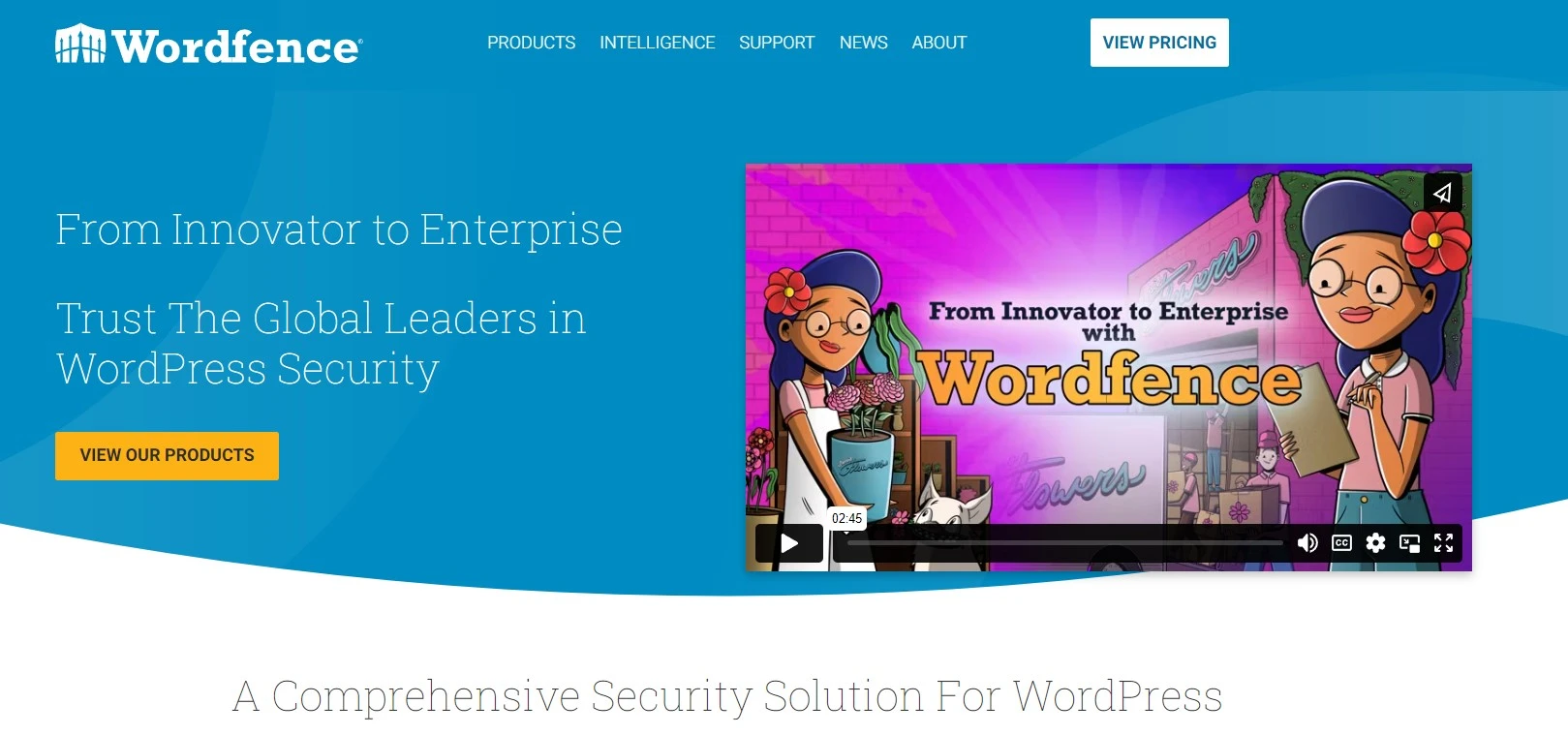
Wordfence is the default answer for a reason. Its firewall runs inside WordPress as PHP rather than out in front of your DNS, and that single choice defines the plugin: it sees the logged-in user and the exact request WordPress is about to process, and it costs you PHP execution on every uncached page load.
The free tier is unusually complete. You get the firewall, the malware scanner that diffs your core, theme and plugin files against the wordpress.org copies, login rate limiting, two-factor authentication and passkeys. The catch is stated plainly in Wordfence’s own plugin listing: free sites receive new firewall rules and malware signatures on a 30-day delay, and country blocking is Premium-only. Thirty days is a long time in vulnerability terms.
- Key features: endpoint web application firewall, file-integrity malware scanner, login rate limiting, 2FA and passkeys, live traffic view.
- Price: free tier on 5 million active installs. Wordfence’s pricing page was not reachable at the check date, so no Premium, Care or Response figure is quoted here. Confirm it at checkout.
- Best for: anyone who wants one plugin to cover the firewall, the scanner and two-factor authentication for WordPress logins without stitching three tools together.
- Skip it if: you are on cheap shared hosting where PHP is already the bottleneck, or you already run a DNS-level firewall and do not want two rule engines arguing.
Kadence Security, formerly iThemes Security and then Solid Security
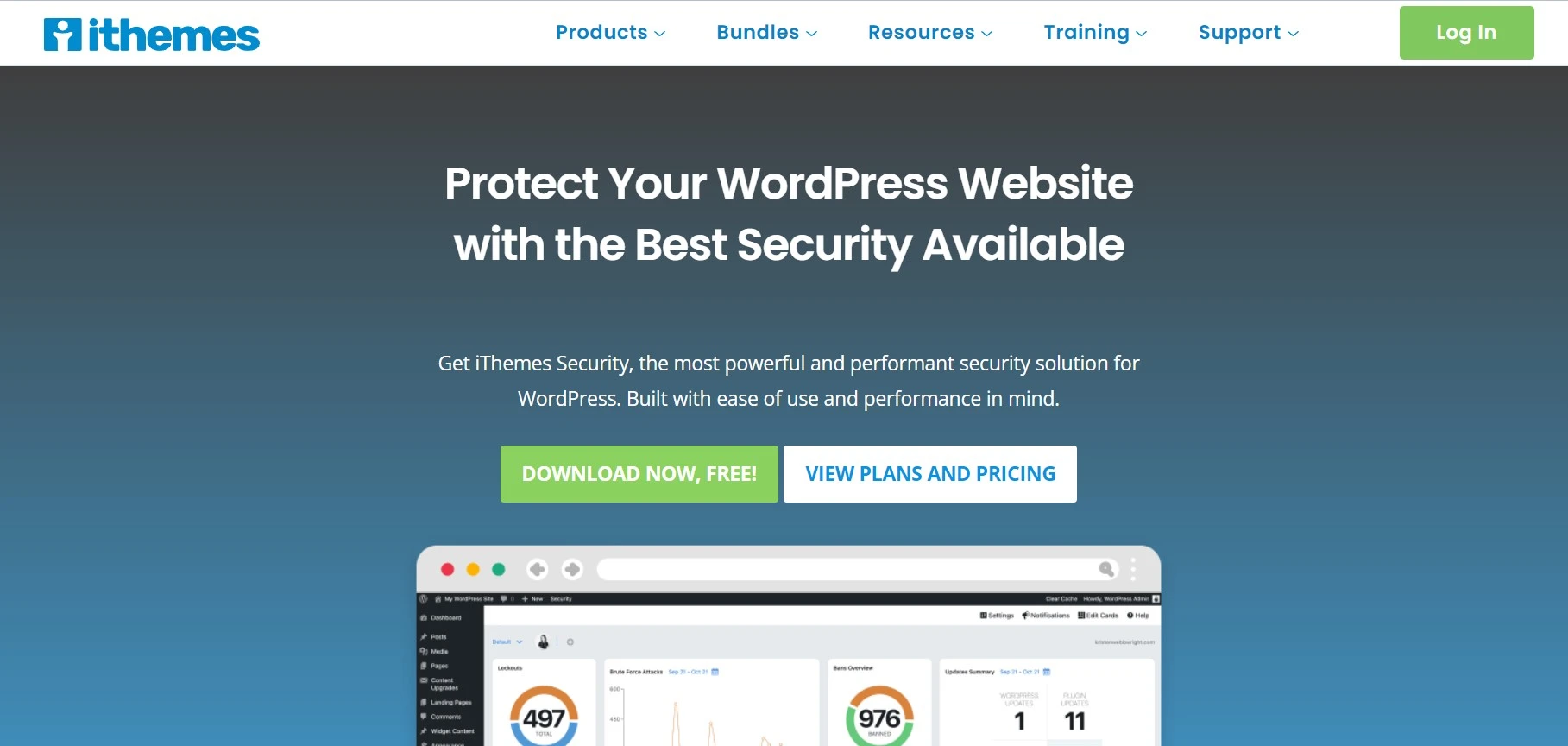
Every roundup still calling this plugin iThemes Security is years out of date, and the screenshot above is why we left it in. iThemes became SolidWP and the plugin became Solid Security; then Liquid Web folded SolidWP into Kadence. The plugin’s wordpress.org listing now reads Kadence Security, the author field says Nexcess, and solidwp.com redirects to a Kadence add-ons page.
The free plugin is still good, still on 700,000 sites, and still the friendliest onboarding of anything here. The commercial half is the problem. There is no standalone Security Pro licence any more. The firewall, 2FA and Patchstack-powered virtual patching are listed as included with Kadence Pro and Elite on the Kadence pricing page, which sells Essentials at $99/year, Pro at $299/year and Elite at $499/year, priced per site.
- Key features: guided setup with security presets by site type, brute-force protection network, file change detection, 2FA, and virtual patching in the paid tier.
- Price: free plugin. The paid features arrive only bundled inside Kadence Pro at $299/year per site, alongside a theme, a block library and WooCommerce tools.
- Best for: people who were already going to buy Kadence Pro for the page-building side, in which case the security module is effectively free.
- Skip it if: you use a different theme. Paying $299/year for a stack you will not touch, to get one security module, is a bad trade when Patchstack sells the same virtual patching directly.
Sucuri Security
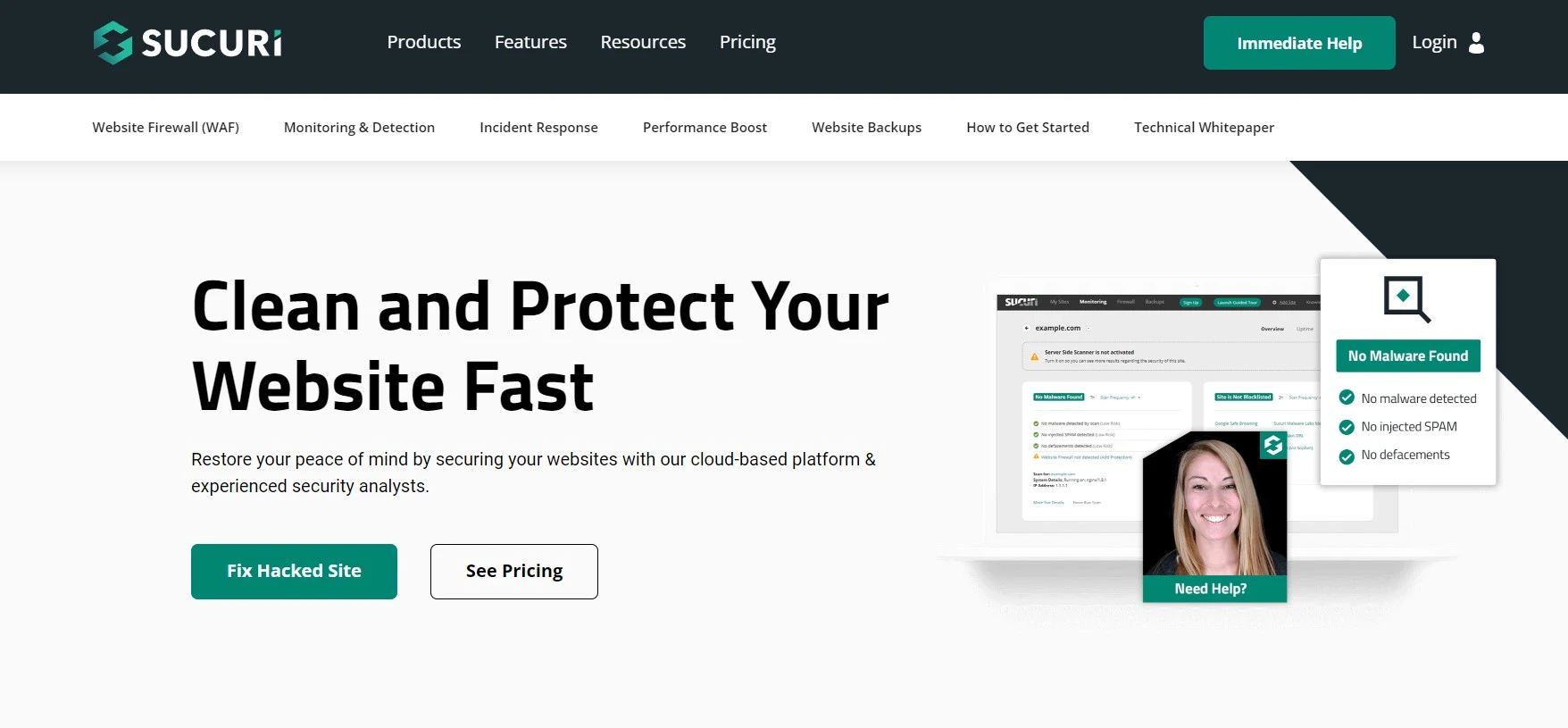
Sucuri splits into two products that people constantly confuse. The free plugin on 600,000 sites is a scanner, an audit log and a hardening panel. It does not block anything. The blocking happens at Sucuri’s cloud firewall, which sits in front of your site at the DNS level, so bad traffic never reaches your server at all.
That architecture is the opposite of Wordfence’s, and it is the reason Sucuri is the sane pick for a site that is already struggling under attack traffic. It also doubles as a CDN, which is a genuine side benefit if attack traffic has been eating your server response times. The cost is a DNS change and a hard dependency on a third party for every request.
- Key features: DNS-level firewall and CDN, remote malware scanning, blocklist monitoring, post-hack cleanup by their analysts, security activity auditing.
- Price: the Sucuri pricing page lists Basic Platform at $229/yr, Pro at $339/yr and Business at $549/yr, all including cleanups. Firewall on its own is $9.99/mo, which works out at $119.88 a year.
- Best for: sites taking real attack traffic, and anyone who wants the malware removal included rather than sold as an emergency add-on. Our guide to malware removal plugins covers the alternatives.
- Skip it if: you cannot change nameservers, which rules it out on a lot of managed and client-controlled DNS setups.
MalCare
MalCare’s pitch is the one thing most security plugins quietly avoid: it will actually clean the site, on its own servers, without you paying an hourly incident rate. Scanning runs off-site too, so a deep scan does not hammer the box the way an on-server scanner does.
Read the tier names carefully. Protect prevents but explicitly does not include cleanup; Repair does. Buy MalCare for the cleanup and land on the cheaper plan, and you will find out on the worst possible day.
- Key features: off-site malware scanning, one-click cleanup, firewall with virtual patching, geo-blocking, bot protection, 2FA for wp-admin.
- Price: free detection-only plan. On the MalCare pricing page, Protect is $99/yr for one site, Repair $299/yr, Fortify $499/yr, with five-site bundles at $299, $899 and $1,499. Plans renew annually at the same price.
- Best for: a shop or a client site where an unplanned cleanup invoice would hurt more than the subscription does.
- Skip it if: you are on a hobby blog. Detection plus a good WordPress backup plugin and a fresh install is a cheaper recovery path than $299 a year.
All-In-One Security (AIOS)
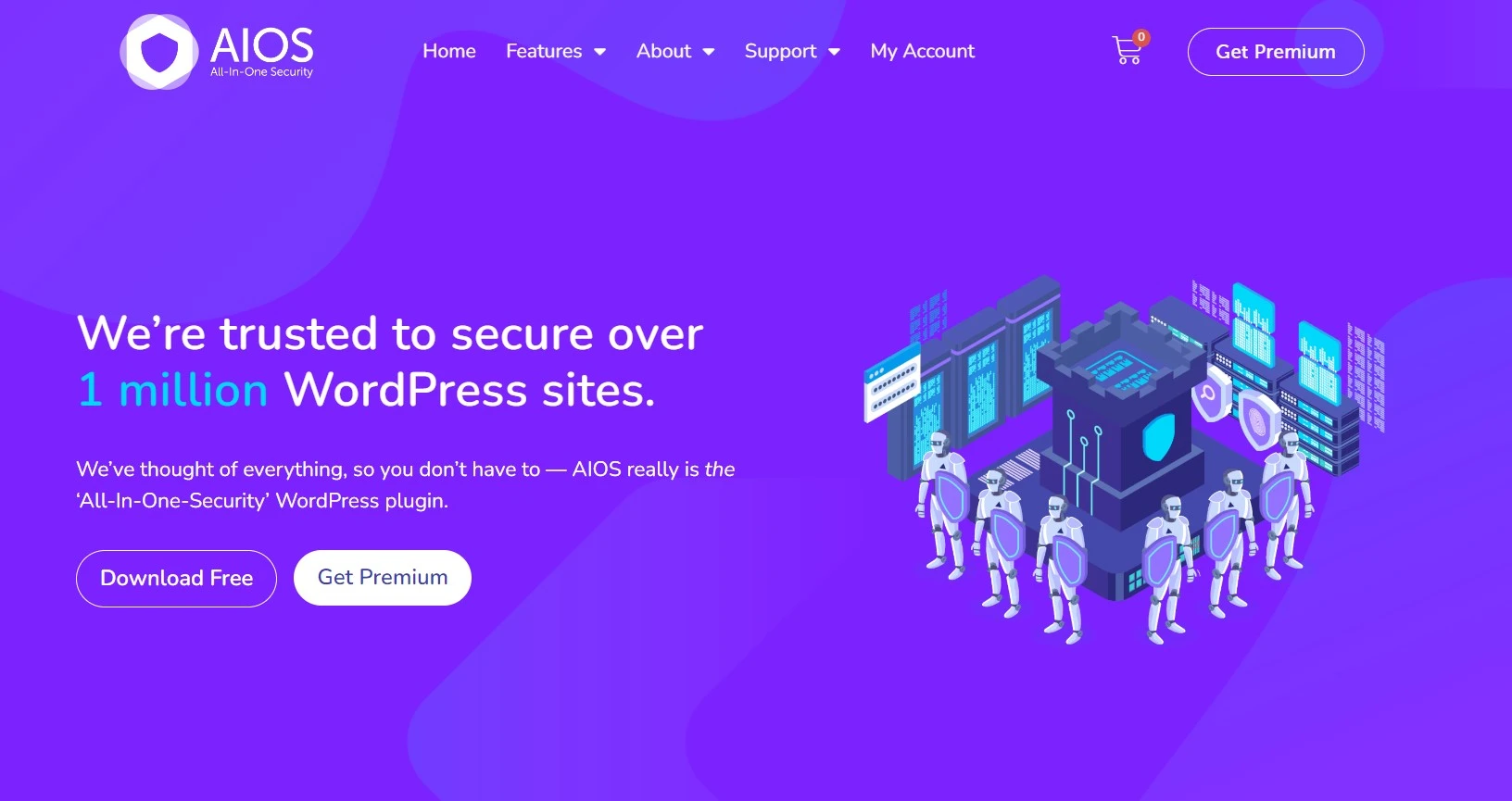
AIOS, now maintained by the UpdraftPlus team, is the plugin that teaches you something. It grades every hardening setting as basic, intermediate or advanced and gives you a running security score, so a beginner can work down the list without accidentally locking themselves out at step three. That structure is worth more than the feature count.
It is also the cheapest paid entry in dollars anywhere in this table, though only for the first year. The renewal is exactly double the introductory price, which is at least printed on the pricing page next to the offer rather than buried in the checkout.
- Key features: login lockdown and 404 blocking, database and file hardening, firewall rules, spam filtering, country blocking, 2FA, blacklist monitoring.
- Price: free plugin on 1 million sites. Premium runs from $44.50 for the first year and renews at $89.00/year for up to two sites, per the AIOS pricing page, which also offers euro and pound pricing. Business is $74.50 then $149.00/yr for ten sites.
- Best for: a first WordPress site, or anyone who wants brute-force protection and login hardening explained rather than just switched on.
- Skip it if: you need malware removal. AIOS scans and alerts, it does not clean.
Patchstack
Patchstack solves a different problem from everything else here, and it is the problem that actually gets most sites hacked. Sites rarely fall to clever zero-days. They fall because a plugin shipped a vulnerability, a fix landed, and nobody updated for six weeks. Patchstack deploys a targeted rule for that specific vulnerability on your specific site, so the hole is closed before you get around to the update.
Its pricing is now split awkwardly. The public Patchstack pricing page only sells the Developer plan at $69 a month billed annually, which the page itself states as $828 a year, with three seats and extra site packs at $12.50 a month. Individual site owners are pointed at partners and resellers. But the plugin’s own wordpress.org listing says Personal free-plan users can switch on protection per site for $5 per site per month, which is $60 a year, and that is the number small sites should be working from.
- Key features: vulnerability early warning ahead of public disclosure, virtual patching without touching your code, remote update management, hardening rules, community IP blocklist.
- Price: free Personal plan for monitoring. Per-site protection at $5/site/month, or the Developer plan at $828/year.
- Best for: anyone maintaining sites they do not log into weekly, and agencies running the same twelve plugins across forty client sites.
- Skip it if: you want a scanner and a login lockdown screen. Patchstack is not a general-purpose security suite and does not pretend to be.
Jetpack Protect and Jetpack Security
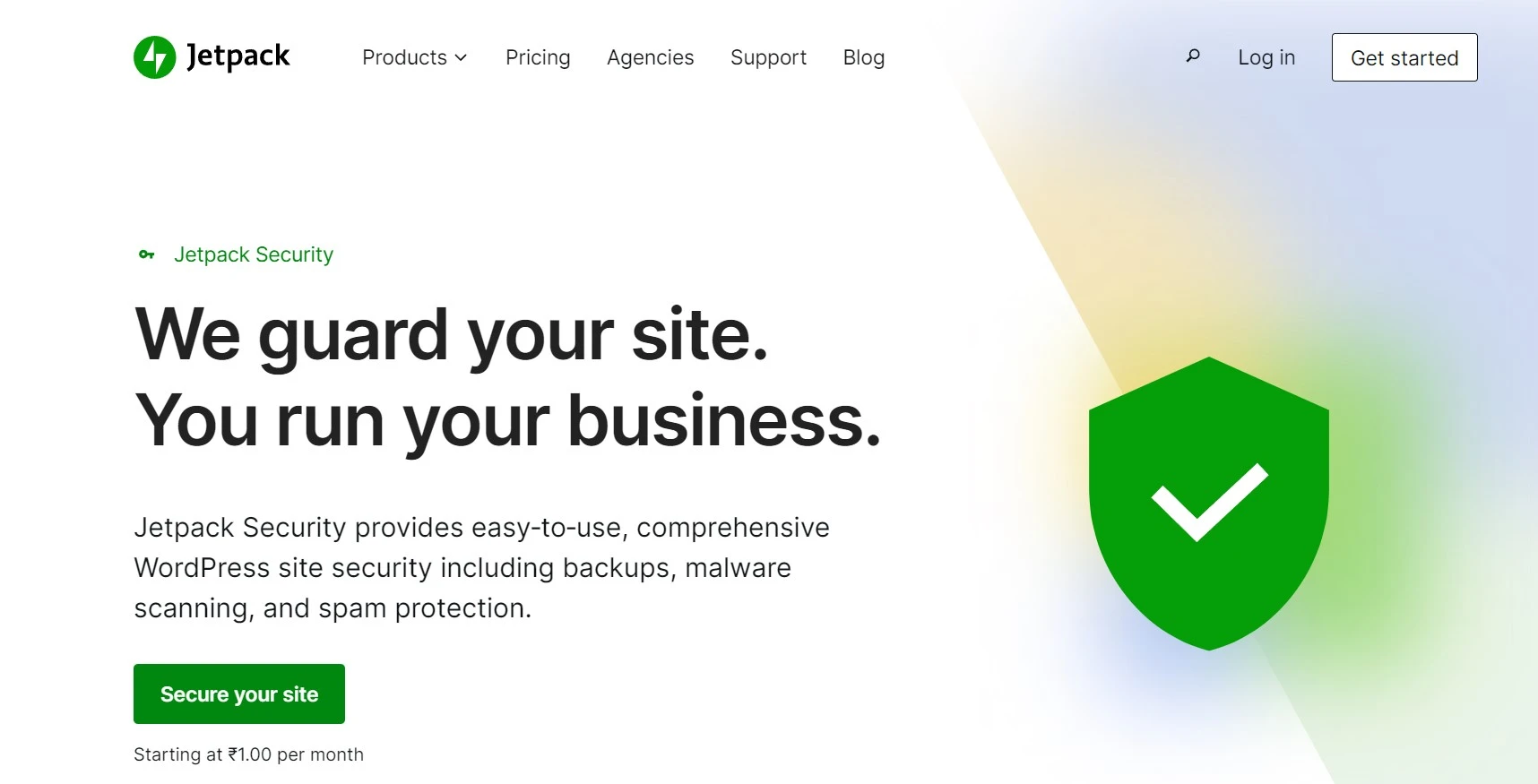
Jetpack Protect is the free scanner, on 100,000 sites, and it is built on the WPScan vulnerability database that Automattic now owns. It tells you which of your plugins and themes have known holes. It does not block anything and it does not clean anything, which is worth knowing before you install it expecting a firewall.
The blocking, the one-click fixes and the real-time backups live in the paid Jetpack Security bundle. If you are buying that, you are mostly buying VaultPress backups with a scanner attached, and you should price it against a dedicated backup and migration tool before committing.
- Key features: WPScan-backed vulnerability scanning, web application firewall and one-click fixes in the paid tier, real-time cloud backups with unlimited restores, Akismet spam filtering.
- Price: Protect is free. Jetpack Security with 10GB of backup storage is $119.40 for the first year and renews at $239.40 a year. The Jetpack pricing page switches currency by visitor location, so those dollar figures may not be what you see; check your own cart.
- Best for: sites already inside the Automattic ecosystem, and anyone who wants backups and comment spam filtering bundled with the scanning.
- Skip it if: you only want security. You will be paying for a bundle where the backup storage is the expensive part.
Security Ninja
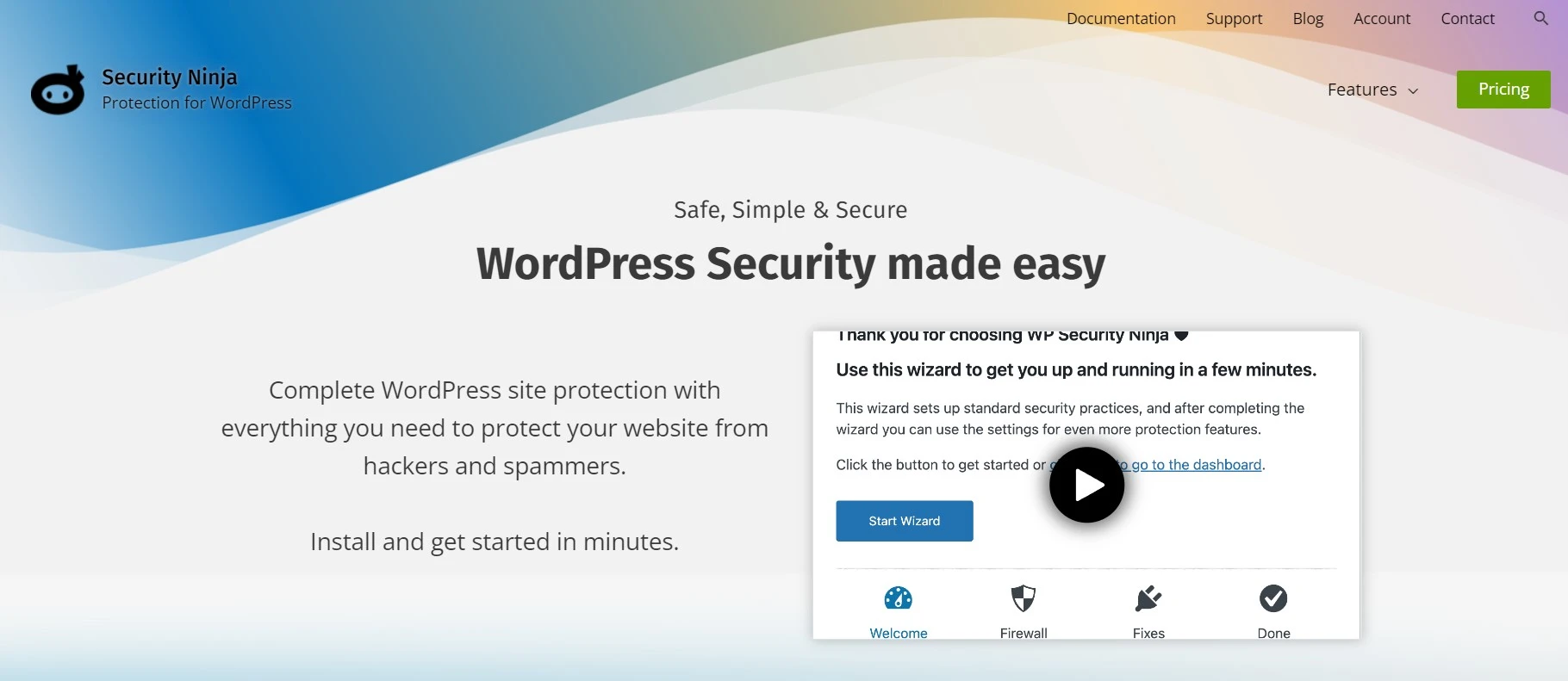
Security Ninja runs a battery of tests against your install and, more usefully, tells you how to fix each thing it finds instead of just colouring it red. On a site somebody else built and handed to you, that report is a genuinely fast way to find out what you inherited.
It is the smallest plugin here by installs, at around 7,000, which is a fair reason to hesitate on a client site. Weigh that against how actively it is maintained, which is more than several better-known options manage.
- Key features: security tests with plain-English fixes, cloud firewall with IP and country blocking, malicious file scanner, visitor logging, scheduled scans.
- Price: free version available. Pro is $119.00/year for one site on the Security Ninja pricing page, $259.00 for five and $599.00 for twenty-five, with white-labelling unlocked at twenty-five sites. A renewal price is not separately published.
- Best for: auditing a site you did not build, and agencies who want white-label reports to hand clients.
- Skip it if: you want the biggest possible support community behind the plugin protecting your business.
SecuPress
SecuPress is the European option, and that is not a throwaway detail. It is a French product priced in euros, which matters if you invoice in euros and matters more if a client’s procurement rules care where their security vendor is based. The scanner also offers to fix much of what it finds rather than just listing it, which puts it closer to Security Ninja than to Wordfence in how it wants to be used. Around 40,000 sites run it.
- Key features: automated scan-and-fix, 2FA, PHP malware scan, GeoIP blocking, scheduled tasks, white labelling, PDF security reports.
- Price: free version, and Pro at 60.00 € per site per year on the SecuPress pricing page, which serves euros by default with a dollar switcher. Agency accounts carry a one-off 99.00 € fee. The page states that discounts apply to the first period only and not to renewals.
- Best for: euro-billing freelancers, and anyone whose client asks where the data goes. Pair it with your GDPR compliance stack.
- Skip it if: you are comparing dollar prices across this table. You cannot rank a euro price against them, and you should not try.
WPScan, and why it is now a skip
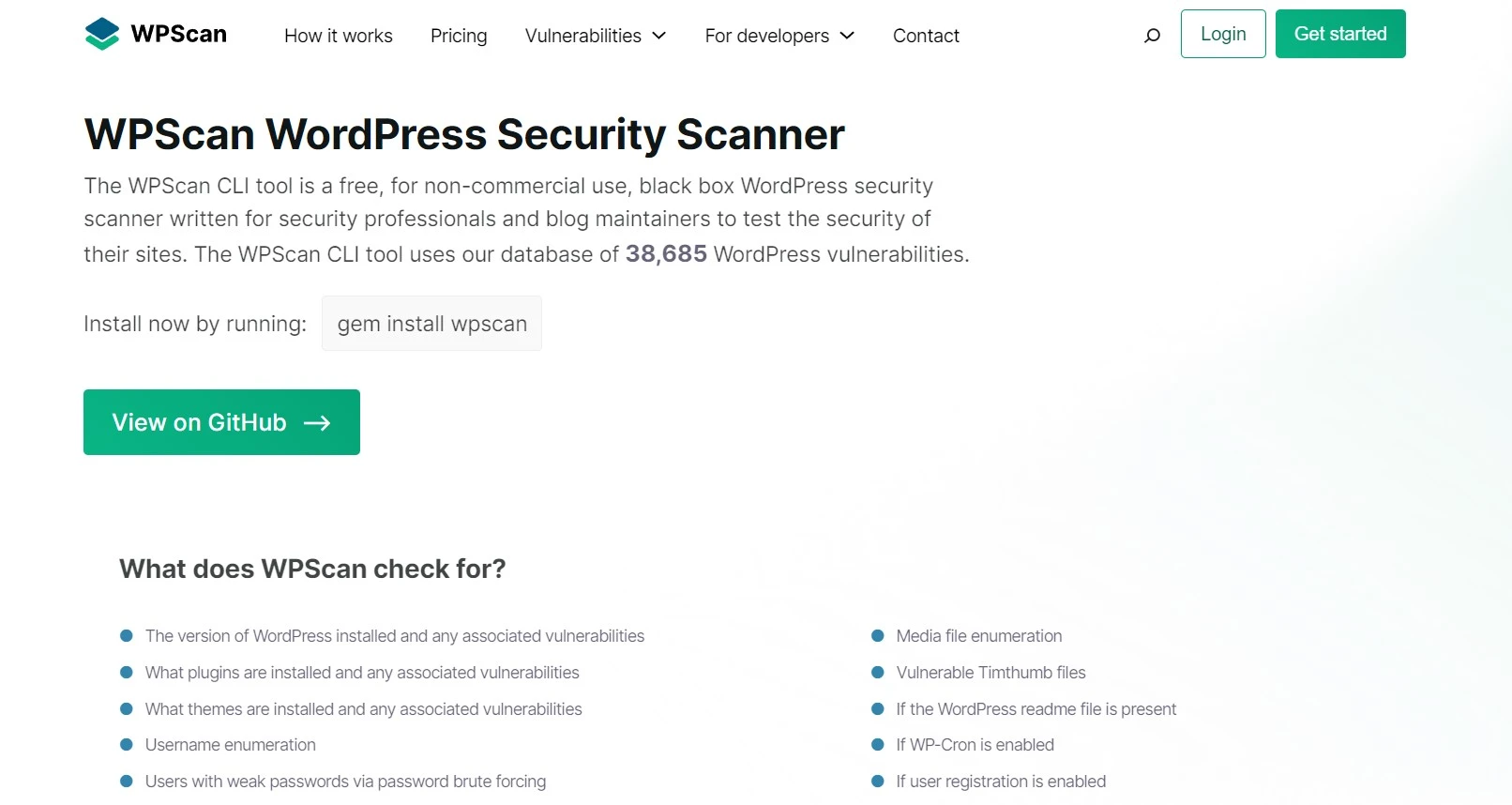
WPScan’s vulnerability database is still one of the best in WordPress, and the CLI scanner is still excellent if you enjoy that sort of thing. The plugin is a different story: roughly 8,000 installs, last updated January 2026, which for a security plugin is a signal.
The WPScan pricing page now lists two things: Enterprise, priced on request, and a free researcher tier capped at 25 API calls a day for non-commercial use. Under a heading asking whether you need a small business plan, the page sends you to Jetpack Protect. When a vendor tells you to go use their other product, believe them.
- Key features: a manually curated vulnerability database, CLI black-box scanner, API access for building your own tooling.
- Price: free for non-commercial research, capped at 25 API calls a day. Everything else is a custom enterprise quote.
- Best for: security researchers, hosts, and developers wiring vulnerability data into their own dashboards.
- Skip it if: you run one to fifty WordPress sites for a living. Use Jetpack Protect for the same data, or Patchstack if you want that data to actually block something.
What most roundups get wrong about security plugins
They claim security plugins do not cost you performance. This article said exactly that in its previous form, and it was wrong. An endpoint firewall like Wordfence is PHP that runs before WordPress does, on every request that misses your cache. A scanner reading every file on disk competes with your site for the same CPU. The cost is usually acceptable and often invisible behind a decent caching layer, but it is not zero, and anyone telling you it is has not looked.
They treat scanning and cleaning as the same thing. Most of the plugins here detect. Two of them, MalCare and Sucuri, remove. If you are infected right now, a scanner is a diagnosis, not a treatment, and you need a known-clean backup or a human being.
They never mention that the products keep being renamed and resold. In three years iThemes Security has changed name twice and owner once, and its paid tier stopped being a product you can buy on its own. That is not a footnote. If you bought a Solid Security licence for a non-Kadence site, your renewal path changed underneath you.
They rank free tiers as if the free tiers were equal. Wordfence gives away a working firewall with delayed rules. Sucuri’s free plugin blocks nothing at all. Jetpack Protect only scans. Three plugins, three completely different meanings of the word free.
The catch: what breaks when you install one of these
- Two firewalls will fight. Running Wordfence behind Sucuri’s cloud firewall means every visitor arrives from Sucuri’s IPs, so your rate limiting and lockouts start counting the proxy rather than the attacker. Configure the plugin to read the forwarded IP header, or pick one firewall.
- Your host may already run one. Plenty of managed hosts include a WAF and malware scanning in the plan you are paying for. Check before you buy a second one, and check again when you compare WordPress hosting platforms.
- Login hardening locks people out, and the person it locks out is usually you. Enable 2FA and set up recovery codes in the same sitting. Never enable it on a client site without telling the client first.
- Country blocking blocks customers. It is a blunt instrument. It will eventually block a real buyer travelling abroad, and you will hear about it by email.
- Scheduled scans hit at the worst time. On shared hosting, a full file scan can be the reason your site went slow at 3am. Move it, or scan off-site with something like MalCare.
A short decision path
- Site is currently hacked? Buy MalCare Repair or a Sucuri platform plan today. Both include the cleanup. Do the comparison shopping afterwards.
- Hobby or new blog, budget zero? Wordfence free, or AIOS free if you want the checklist. Add off-server backups and stop there.
- Site earns money, you update plugins late? Patchstack for the virtual patching, at $5 per site per month, on top of a free scanner.
- Getting hammered by bot traffic? Sucuri’s DNS-level firewall, so the traffic never reaches your server. It will help your site speed as a side effect.
- Twenty or more client sites? Patchstack Developer, plus one free endpoint plugin per site for the login hardening.
Frequently Asked Questions
Is iThemes Security still available?
Not under that name. It became Solid Security in 2023 and its wordpress.org listing now reads Kadence Security, published by Nexcess. The free plugin still works and still updates. The paid features are no longer sold separately; they ship inside Kadence Pro at $299 a year per site.
Do security plugins slow WordPress down?
Yes, a little. An endpoint firewall runs PHP before WordPress loads on every uncached request, and file scans compete for CPU. On decent hosting with page caching the cost is usually invisible. On cheap shared hosting it is not, which is where cloud firewalls earn their money.
Can a security plugin clean a site that is already hacked?
Only some of them. Most scan and alert but leave removal to you. MalCare includes cleanup from its Repair plan upwards, and every Sucuri platform plan includes cleanups. If your plugin only detects, your real recovery tools are a clean backup and a fresh install.
Is the free version of Wordfence good enough?
For most small sites, yes. You get the firewall, the malware scanner, login limiting and 2FA. The trade-off is stated in Wordfence’s own plugin listing: free sites get new firewall rules and malware signatures 30 days late, and country blocking is Premium-only.
Is it safe to run two security plugins at once?
Generally no. Two firewalls produce duplicate lockouts, false positives and broken logins, and they make it much harder to work out which one blocked a real customer. One endpoint plugin plus a virtual patching service like Patchstack is a sensible pairing; two full suites is not.
What is virtual patching, and who needs it?
It is a rule that blocks the exploit for a specific known vulnerability in a plugin you have installed, so the hole is closed before you update. You need it if you cannot update within days of a disclosure, which describes almost every site nobody logs into weekly.
What is the cheapest way to secure a WordPress site properly?
Wordfence free for the firewall and scanner, off-server backups, and $5 per site per month for Patchstack virtual patching. That covers detection, blocking and the update gap for $60 a year. Add a cleanup-inclusive plan only when downtime would cost you more than the plan does.
Does a security plugin replace secure hosting?
No. A plugin cannot fix an outdated PHP version, a shared server with noisy neighbours, or a host with no off-server backups. Hardening starts with the hosting choice; the plugin covers what the host leaves to you, mainly logins, file integrity and vulnerable plugin code.
Our call on the best WordPress security plugins in 2026
Install Wordfence free. It is the strongest thing you can put on a WordPress site for nothing, and for a great many sites it is where the story ends. Accept the 30-day rule delay for what it is, and close that gap with Patchstack at $5 per site per month once the site starts mattering. Sixty dollars a year is a rounding error against a week of downtime.
If the site already earns, buy cleanup rather than more scanning. MalCare Repair at $299 a year or Sucuri’s Basic Platform at $229 a year both put a human on the problem, and that is the thing you cannot install your way out of at 2am.
Do not buy Kadence Pro at $299 a year for the security module alone, and do not install WPScan’s plugin expecting it to be maintained like the database behind it. And whatever you choose, remember that no plugin outranks a host that keeps working backups off your server, which is why choosing the right host is the security decision you make first.



[…] too, along with any backdoor that was already present in the last few archives. Backups sit next to WordPress security plugins and a proper cleanup with malware removal tools, never instead of them. Restore first if the site […]
[…] site, small budget: Wordfence free, off-server backups, and a serious look at your wider WordPress security setup. Most infections we get called about started with an abandoned plugin nobody updated, not with a […]
[…] everyone, and especially anyone who has not yet chosen from a shortlist of WordPress security plugins. If a firewall and a scanner are on your list anyway, this removes the need for a separate 2FA […]
[…] tools is a substitute for a hardened site. If your login page is the thing under load, you want WordPress security plugins and rate limiting, not a comment […]
[…] are done. Deactivating leaves the files on disk. Delete the plugin. Pair that habit with one of the WordPress security plugins if the site does not already have […]
[…] execution. Our brute force protection plugins comparison covers the login layer, and the broader WordPress security plugins roundup covers what sits behind it. Code execution behind a weak admin password is not a snippet […]
[…] that stopped receiving fixes months ago. Deactivate it, delete it, then run a scan with one of the WordPress security plugins before you replace the […]
[…] maintained by very small teams. Treat them as a real part of your attack surface and keep a proper security plugin watching, because you will not read every […]
[…] delete it, then replace the timer with one of the plugins above. This is also the sort of thing a WordPress security plugin should be flagging for you rather than a blog […]
[…] that has not launched yet, and for backups and security the free versions in our backup plugin and security plugin roundups will do the […]
[…] it is on a site you inherited, remove it, replace it with something above, and scan with one of the WordPress security plugins we recommend. A plugin pulled for a security issue deserves a follow-up, not just a […]
[…] it if: your host runs a firewall at the edge and you would rather not duplicate it in PHP. Our WordPress security plugins roundup covers the […]