


WordPress code snippet plugins solve a real problem: you need thirty lines of PHP on a client site, and dropping them in functions.php means the next theme update deletes your work. So you install a snippet manager. What most roundups leave out is that you have installed a plugin whose whole job is running arbitrary PHP from the dashboard. That is worth doing, and worth doing carefully. Below: what each one costs, what it saves you from, and where it bites.
Quick verdict
- Best overall: WPCode. The free version already runs PHP, catches fatal errors on activation and ships a safe mode you can trigger from the admin URL. That combination is what you want on a site somebody else has to maintain.
- Best free: FluentSnippets. Genuinely free with no paid tier waiting, and it writes each snippet as a real PHP file instead of querying the database on every page load.
- Best one-time payment: Advanced Scripts, at $19.99 for one site or $39.99 for unlimited sites, both lifetime licences that never renew.
- Skip it if: all you need is a Google Analytics tag and a Meta pixel. Your consent or analytics plugin almost certainly has a field for that already, and adding a PHP execution engine to paste in two script tags is a bad trade.
- Our call: install WPCode free, turn on a proper backup schedule the same afternoon, and only pay when you actually hit a wall.
Best WordPress code snippet plugins in 2026, compared
| Plugin | Free version | Paid entry | Renews at | Sites at entry | Best for |
|---|---|---|---|---|---|
| WPCode | Yes, 3M+ installs | $49 first year | $99 per year | 1 | Client sites and handovers |
| Code Snippets | Yes, 1M+ installs | $3.90 per month, or $137 once | Same monthly rate; the lifetime licence does not renew | 1 | Reusing a personal snippet library |
| FluentSnippets | Yes, no paid tier | Nothing to buy | Nothing to renew | Unlimited | File-based storage, zero database queries |
| Advanced Scripts | No free version | $19.99 once | Never | 1 | Snippet-heavy builds without a subscription |
| Header Footer Code Manager | Yes, 600k+ installs | $35 per year | $35 per year | 1 | Tracking scripts only, no PHP |
What you are actually installing
Every plugin on this list but one does the same risky thing, and does it well: it takes text you type into a form and executes it as PHP. Header Footer Code Manager is the exception; it does not run PHP. That is not a criticism, it is the entire feature. But it changes your threat model in three ways that most roundups never mention.
Anyone who reaches the snippet screen can run code
Standard hardening advice is to add DISALLOW_FILE_EDIT to wp-config.php so administrators cannot edit theme and plugin files from the dashboard. WordPress documents it as a way to stop overzealous users editing sensitive files and crashing the site. A snippet plugin quietly reopens that door with a nicer interface. All of these gate the screen behind an administrator-level capability, which is fine on a one-person site and uncomfortable on a site with five admins and a shared password in a spreadsheet.
If you have not tightened logins yet, do that before you add code execution. Our brute force protection plugins comparison covers the login layer, and the broader WordPress security plugins roundup covers what sits behind it. Code execution behind a weak admin password is not a snippet plugin problem, but it becomes one very quickly.
A bad snippet takes the site down, and there are two routes back
Fatal error, white screen, no dashboard. WordPress has shipped recovery mode since version 5.2: core catches the fatal error, pauses the plugin that caused it, and emails the admin address a secret link that logs you into a working dashboard. That works when the snippet plugin itself gets the blame. When it does not, each plugin has its own kill switch, and every one of them needs file access.
- Code Snippets: add
define( 'CODE_SNIPPETS_SAFE_MODE', true );towp-config.php, or append&snippets-safe-mode=1to the URL. The vendor describes safe mode as temporarily pausing all snippets so you can get in and deactivate the broken one (safe mode docs). - FluentSnippets:
define( 'FLUENT_SNIPPETS_SAFE_MODE', true );inwp-config.php(safe mode docs). - WPCode: load
/wp-admin/?wpcode-safe-mode=1, which stops every snippet executing (error handling docs). - Advanced Scripts: the vendor states that on failure you get a link that turns safe mode on and pauses PHP execution until you fix the snippet.
Note the pattern: SFTP or a hosting file manager is the real recovery tool. A dashboard-based file manager plugin will not help here, because the fatal error takes the dashboard down with it. Those plugins are still useful, just not for this, and our file manager plugins comparison explains what they are actually good at. Find your SFTP credentials before you need them, not during.
Safe mode is not a backup
Safe mode gets you back into the dashboard. It does not undo a snippet that just deleted four hundred rows of post meta. Any snippet that writes to the database gets a fresh backup first, no exceptions. Our WordPress backup plugins guide covers scheduling and off-site copies. If code you did not write has appeared in your snippet list, that is a compromise rather than a mistake, and malware removal plugins is the next stop.
WPCode
WPCode is the default recommendation for a reason. Its WordPress.org listing shows 3 million-plus active installs and a 4.9 rating, which makes it the most-installed free option here by a wide margin: Code Snippets sits at 1 million-plus and FluentSnippets at 50,000-plus. Popularity is not quality, but on a plugin that executes PHP, a large install base means bugs surface fast.
Key features: PHP, JavaScript, CSS, HTML and plain text snippets; header and footer script insertion; a library of ready-made snippets for common tasks; shortcode output for dropping a snippet into a specific post. The part that matters is the two-layer error handling. Activate a broken snippet and WPCode runs it, catches the error and refuses to activate it. If a snippet fails later, at runtime, the plugin deactivates it rather than letting it lock you out.
Price: free, then four paid tiers on the WPCode pricing page, all in USD: Basic $49 for one site, Plus $99 for five, Pro $199 for twenty-five, Bundle $349 for a hundred. Those are introductory figures. The fine print states that all renewals are at full price, which means $99, $149, $249 and $399 respectively from year two.
Best for: sites you will hand to someone else. The error protection is the feature you are really buying, and it is in the free version.
Skip it if: you need role-based access control. Letting an editor manage some snippets without giving them the whole dashboard sits in the Pro tier, $199 the first year and $249 on renewal. For a single agency site that is a lot of money for one permission setting.
Code Snippets

The original, and still the one most developers reach for. The WordPress.org listing shows 1 million-plus active installs, a 4.7 rating across 509 reviews, and version 3.10.1 released in late August 2026, so it is actively maintained rather than coasting.
Key features: a snippet list you can activate and deactivate one row at a time, a built-in editor with syntax highlighting, export and import so a snippet library travels between sites, and network-wide snippets on multisite. Safe mode is the standout: one constant in wp-config.php pauses every snippet, which is exactly what you want at eleven at night when a client site is white.
Price: the core plugin is free. Pro starts at $3.90 per month for one site, or $137 as a one-time lifetime licence for one site, per the Code Snippets pricing page. The page also shows an annual figure, but it is not tied to a site count anywhere on the page, so we have left it out rather than guess. Check at the cart before you commit.
Best for: developers who carry the same twenty snippets from build to build and want a clean export file.
Skip it if: you want one obvious price. Monthly, annual and lifetime options sit side by side and do not line up neatly, and the free version does everything a single site normally needs anyway.
FluentSnippets
The newest here and the most opinionated. FluentSnippets, from WPManageNinja, does not store snippets in a database table at all. Its documentation states that each snippet is written as a real PHP file in a storage folder under wp-content, with no database queries at runtime. The WordPress.org listing shows 50,000-plus installs, a 4.7 rating and version 10.56 updated in August 2026.
Key features: PHP, CSS, JavaScript and HTML snippets; file-based storage; safe mode through FLUENT_SNIPPETS_SAFE_MODE; and a standalone mode that keeps snippets running from mu-plugins after the plugin itself is deactivated or deleted.
Price: free, and there is no paid tier to be upsold into. That is unusual enough to say plainly.
Best for: performance-conscious builds, and anyone who would rather grep a folder than open phpMyAdmin.
Skip it if: your host runs a read-only wp-content, which some managed platforms do. And understand standalone mode before you use it: code that keeps running after the plugin is deleted is a lovely feature on your own site and a nasty surprise for whoever inherits the build. Document it in the handover or leave it off.
Advanced Scripts
The only commercial-only option here. Advanced Scripts is not on WordPress.org; you buy it from Clean Plugins and install the zip yourself. That means no free download, no public review count, and updates tied to your licence.
Key features: PHP, CSS and JavaScript, plus SCSS and LESS compiled in place, plus plain HTML tracking snippets for analytics and verification tags. Safe mode is built in, and the vendor states that a failure gives you a link to enable it and pause PHP execution until the snippet is fixed. Loading external resources from a CDN or the media library is handled in the same interface.
Price: $19.99 for one site, $29.99 for five, $39.99 unlimited. All USD, all lifetime licences with unlimited updates and support, and the vendor is explicit that there are no recurring charges after the seven-day trial period. Thirty-day refund window. That $19.99 is the cheapest one-time licence in the table above.
Best for: freelancers and small agencies who live in snippets and are tired of annual renewals. At $39.99 once for unlimited sites, the maths stops being a discussion.
Skip it if: you need to try before you buy, or your client procurement process cannot handle a plugin that is not on WordPress.org. Lifetime licences also carry the usual risk: they are only lifetime while the vendor is trading.
Header Footer Code Manager

Included with a caveat: this one does not run PHP. Its own description says it accepts any HTML, JavaScript or CSS snippet from any service, and that is the whole scope. If your actual job is tracking tags rather than site functionality, that limit is a feature, because a marketing script cannot fatal your site the way a bad PHP hook can.
Key features: four injection points (head, footer, top of content, bottom of content), and unusually granular targeting for a free plugin: site-wide, a specific post, page, category, tag or custom post type, the latest posts only, or manual placement by shortcode. Device targeting lets you load a script on desktop only or mobile only. The WordPress.org listing shows 600,000-plus installs and a 4.9 rating.
Price: free, with Pro on the DraftPress store at $35 per year for one site, $69 for five and $139 unlimited, in USD. No introductory discount is advertised, so renewal matches the first-year price.
Best for: sites where the only “code” anyone ever adds is a tracking pixel, and you want that job separated from anything that can execute PHP.
Skip it if: you need a single PHP hook. It will not run one, and stacking this alongside a real snippet manager means two plugins doing overlapping jobs.
Three plugins that turn up in this search and are not snippet managers
These get listed in code snippet roundups constantly, including in the earlier version of this article. They are all doing a different job, and two of them are showing their age.
SyntaxHighlighter Evolved
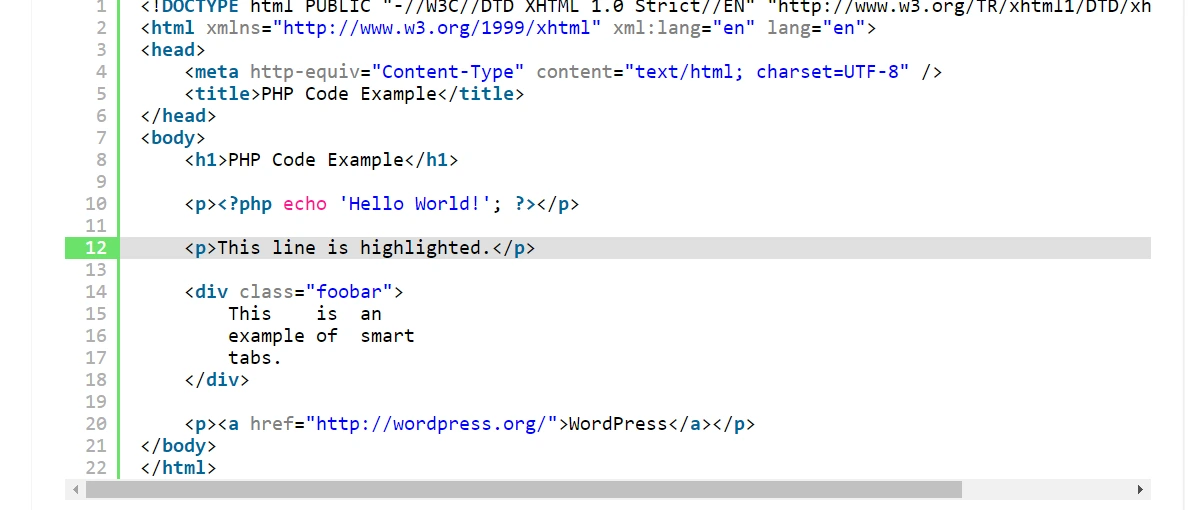
This displays code to your readers with colour highlighting. It never executes anything. Useful for a tutorial blog, irrelevant if you want to change how your site behaves. Its listing shows 20,000-plus installs, a 4.3 rating, last updated about a year ago, and carries WordPress.org’s warning that it has not been tested with the latest three major releases. The block editor’s own code block covers most of this now.
Post Snippets
Reusable text and HTML blocks you insert into posts, with variables. Think affiliate disclosures and repeated boilerplate, not site functionality. Still maintained, unlike the other two here: the listing shows version 4.2.4 released in August 2026, 20,000-plus installs and a 4.6 rating. Good at what it does, just not what you came here for.
Simple Custom CSS
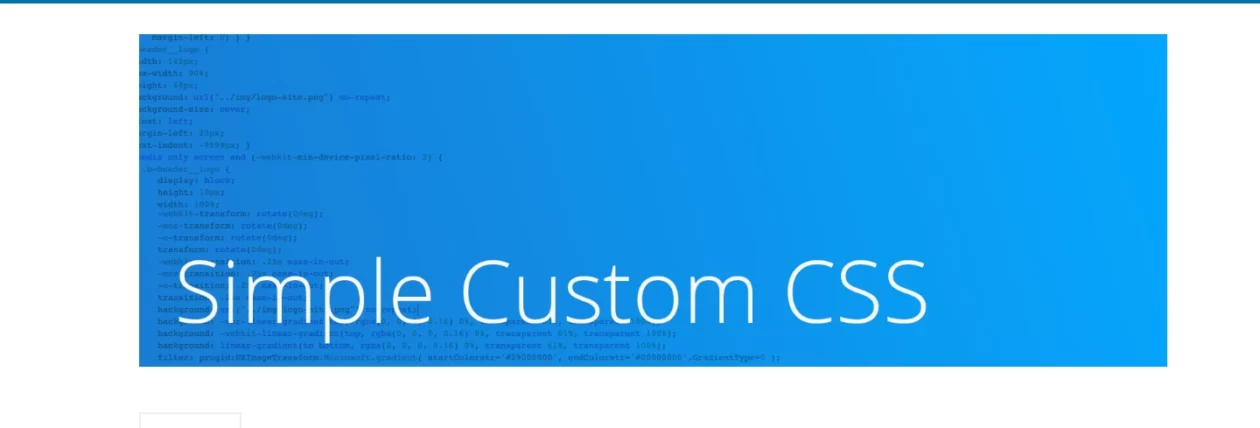
A CSS box, nothing more. Its listing shows 100,000-plus installs and a 4.7 rating, but it was last updated about a year ago and also carries the untested-with-recent-releases warning. WordPress has shipped an Additional CSS panel in the customiser for years, block themes have their own styles panel, and every snippet manager above handles CSS. There is no gap left for this to fill.
The catch nobody prices in
Switching costs are real. Snippets live inside whichever plugin you chose. There is no shared format, so moving from Code Snippets to WPCode is a copy-paste job, one snippet at a time, with a fresh chance to break something at each one. Pick once and stay.
Permissions are the expensive part. Of the single-site paid options in the table above, WPCode Basic costs the most across three years: $49 plus $99 plus $99 comes to $247, against $137 once for a Code Snippets lifetime licence and $19.99 once for Advanced Scripts. And the WPCode feature most agencies actually want, role-based access management, is not in Basic at all; it starts at Pro.
Caching will make you think a snippet is broken. Anything that changes front-end markup needs the page cache purged before you can judge it. If you are running one of the plugins from our WordPress cache plugins comparison, purge first and swear second. The same goes the other way: a snippet that runs a database query on every page load will show up in your site speed work long before the snippet plugin itself does.
Snippet sprawl is the slow failure. Two years in, a site has forty snippets, half of them commented out, none of them dated, and nobody remembers which one is holding the checkout together. Name them properly, add a one-line comment explaining why, and delete rather than deactivate. If a heavy snippet starts pushing you into memory errors, our guide to increasing the WordPress memory limit covers the fix, but the real fix is usually deleting the snippet.
Some jobs are the wrong shape for a snippet. Registering post types and fields by hand is fine until a client needs to edit them, at which point a custom post type plugin and a custom field plugin are less ongoing work than the code. Dequeueing scripts per page is a job for Perfmatters rather than a hand-rolled list you maintain forever. A one-off conditional rule, like hiding a widget when an ACF field is empty, is exactly what a snippet is for.
Which one should you install
- One site, you want it to recover itself: WPCode free. Upgrade only when you hit a wall you can name.
- You build for clients and hate renewals: Advanced Scripts, $39.99 once for unlimited sites.
- Budget is zero and staying zero: FluentSnippets. No paid tier, file-based storage, proper safe mode.
- You carry a snippet library between builds: Code Snippets, for the export file.
- You only need analytics and a pixel: Header Footer Code Manager, or nothing at all. Check your consent plugin first.
Frequently Asked Questions
Is a code snippet plugin safe to use on a client site?
It is as safe as the people who can log in. A snippet plugin runs arbitrary PHP from the dashboard, so anyone with access effectively has code-level control of the site. Restrict admin accounts, use two-factor login, and take a backup before you activate anything.
What happens if a snippet breaks my site?
You get a white screen or a fatal error. WordPress recovery mode, added in version 5.2, emails the admin address a link that loads the dashboard with the offending plugin paused. Code Snippets, FluentSnippets, WPCode and Advanced Scripts each add their own safe mode that switches every snippet off.
How do I turn on safe mode if I am locked out?
Add the constant to wp-config.php over SFTP. Code Snippets uses CODE_SNIPPETS_SAFE_MODE, FluentSnippets uses FLUENT_SNIPPETS_SAFE_MODE, and WPCode uses the admin URL parameter wpcode-safe-mode=1. Set it true, log in, deactivate the offending snippet, then remove the constant again.
Where are code snippets stored?
It depends on the plugin, which matters when you migrate. Code Snippets and WPCode keep snippets in the WordPress database, so a database export carries them. FluentSnippets writes each snippet as a real PHP file under wp-content, so a database-only migration leaves them behind. Check before you move a site.
Can I just use functions.php instead?
You can, in a child theme, and it costs nothing. The trade-off is that snippets become invisible to anyone who does not read code, cannot be switched off from the dashboard, and vanish if the site changes theme. A snippet plugin is mostly about recovery and visibility.
Do snippet plugins slow down a site?
The plugin overhead is small; your snippets are what cost you. A badly written query inside a snippet that runs on every page load will hurt far more than the manager around it. FluentSnippets removes the database lookup entirely by running snippets from files.
Which user roles can add snippets?
Administrator level by default across all of these. That is the awkward answer on multi-author sites, because an editor cannot be given partial access without paid tooling. WPCode puts role-based access management in its Pro tier, at $199 the first year and $249 on renewal.
Is the free version of WPCode enough?
For most single sites, yes. The free plugin runs PHP, JavaScript, CSS and header or footer scripts, catches fatal errors and includes safe mode. Paid tiers add revisions, conditional logic, scheduling and page-specific targeting, starting at $49 for the first year and $99 on renewal.
What should I do before activating a snippet?
Take a full backup, confirm the admin email address that recovery mode would write to, and test on staging if you have one. If you are pasting code from a forum, read every line first. Pasted code breaks sites far more often than the manager running it does.
Our call
Install WPCode free. It is the most-installed of these on WordPress.org, the error handling means a bad snippet deactivates itself instead of taking the site with it, and you can walk away from it later without having paid anything. If you build sites for other people and the renewal treadmill annoys you, buy Advanced Scripts at $39.99 once for unlimited sites and stop thinking about it. If the site must cost nothing forever, FluentSnippets.
Whichever you pick, do the boring part on day one: a working backup schedule, your SFTP credentials somewhere you can reach them from a phone, and an admin email address that someone actually reads, because that is where the recovery link lands. The plugin choice matters far less than having a way back in.


[…] the exact PHP for the post types and taxonomies you built through the interface. Paste that into a code snippet plugin or a must-use file, deactivate CPT UI, and your content model survives without it. That is a rare […]
[…] you are only in there to drop in a snippet, a code snippet plugin is the safer habit. It keeps your changes in the database and out of the theme […]
[…] code snippet plugin will do this, and so will your child theme’s functions.php. Code Snippets is free, sits on […]
[…] you add the tablepress_print_caption_text filter yourself. That is a five-line snippet, and a code snippet plugin will hold it, but you have to know to write […]
[…] stop the strip shoving the page down as it loads. Put the CSS in your child theme or one of the WordPress code snippet plugins, and run the files through an image optimization plugin or ship them as […]
[…] single hardcoded date, once: a code snippet plugin and a few lines of JavaScript, and you own no new […]