

Every roundup of the best visual page builders for WordPress ranks them on feature count. Feature count is not what bites you eighteen months later. The renewal invoice bites. So does the builder CSS loading on a page that never needed it, and the discovery that your layouts only exist inside one vendor’s markup. This is a pricing-and-output comparison of six builders, with every figure checked against the vendor’s own page in August 2026.
Quick verdict
- Best overall: Bricks, $79 a year for one site. It ships as a theme with the builder inside it, so there is no second stylesheet arguing with your layout.
- Best free tier: Breakdance. The free version runs on unlimited sites and includes 80 elements. Elementor’s free plugin is the safer default if somebody else will inherit the site.
- Best value across many sites: Divi at $89 a year for unlimited installs, or $249 once.
- Skip a page builder entirely if: you publish a blog and a handful of static pages. The block editor and one of the full site editing themes already handle that without another plugin.
- Our call: Bricks if you build sites for money and control the whole stack. Elementor Pro if the site will change hands and you need the ecosystem.
The six builders, side by side
Entry price is the cheapest annual licence each vendor sells. Renewal is what you pay in year two, which is the number most comparison tables quietly omit.
| Builder | Entry price | Renews at | Unlimited sites | One-time option | Free version |
|---|---|---|---|---|---|
| Elementor Pro | $60/yr, 1 site | $60/yr | No annual tier; Expert covers 25 sites at $204/yr | None | Yes, Elementor on WordPress.org |
| Bricks | $79/yr, 1 site | $79/yr | Agency, $249/yr | Ultimate, $599 once | No |
| Divi | $89/yr, unlimited | $89/yr | Included at every tier | Lifetime, $249 once | No |
| Beaver Builder | $89/yr, 1 site | $89/yr | Unlimited, $546/yr | None | Yes, Beaver Builder Lite |
| Breakdance | $99.99/yr, 1 site | $99.99/yr, locked | Pro Unlimited, $199.99/yr | None | Yes, unlimited sites |
| Oxygen | No annual plan | Nothing to renew | Included at every tier | Basic, $129 once | No |
Three arithmetic notes, because the table hides them. The cheapest annual entry here is Elementor Pro Essential at $60. The cheapest route to unlimited sites on a subscription is Divi at $89 a year, which undercuts Bricks Agency ($249), Breakdance Pro Unlimited ($199.99) and Beaver Builder Unlimited ($546). And the cheapest one-time licence in the table is Oxygen Basic at $129, against Divi Lifetime at $249 and Bricks Ultimate at $599.
Elementor
Elementor is the default answer, and defaults have real value. The free plugin passed 10 million active installs on WordPress.org, carries a 4.5-star average from 7,297 ratings, and sat at version 4.2.4 on the check date. That install base is the product. It means a tutorial exists for whatever you are stuck on, an add-on exists for whatever widget is missing, and you can hire someone next year who already knows the editor.
The trade is output. Elementor loads widget assets per page and wraps content in more markup than a hand-built template needs, and Pro’s theme builder pulls in more again. It is manageable, but you manage it deliberately rather than getting it for free.
Key features
- Theme builder for headers, footers, archives and single-post templates
- Popup builder and form builder in Pro
- WooCommerce product and checkout templates
- Global colours, fonts and site-wide design tokens
- Custom code injection per page or site-wide
- A deep third-party add-on market, covered in our roundup of Elementor add-on packs
Price: the plugin is free. Elementor Pro starts at $60 a year for one site (Essential, billed annually at $5 a month), then Advanced Solo at $84, Advanced at $108 for three sites, and Expert at $204 for 25. Those tiers show no introductory discount, so year two costs the same as year one. Elementor One, at $180 a year, bundles hosting with the builder.
Best for: sites that will change hands. Client work you will hand over, a business that may hire an in-house marketer, anything where the next person to open the editor is not you.
Skip it if: you care more about DOM size than about the hiring pool, or you are already fluent enough in CSS that the widget library is scaffolding you would rather not carry.
Bricks
Bricks is a theme, not a plugin, and that one architectural decision explains most of what people like about it. There is no parent theme stylesheet layered under the builder output, no reset fighting a reset. You write global classes the way you would write CSS, and the markup that comes out the other end is markup you can read.
It is also the least forgiving builder here for a non-technical owner. Bricks assumes you know what a container, a query loop and a CSS class are. Hand a Bricks site to a client who has only ever used Elementor and you will be on a support call.
Key features
- Full template builder for headers, footers, archives and singles
- Query loop builder for custom post type listings
- Menu builder, popup builder and WooCommerce builder included on every tier
- Conditions and interactions for show/hide logic without an add-on
- 110+ elements, per the vendor’s pricing page
- Local and staging installs do not count against your licence limit
Price: Bricks sells Starter at $79 a year for one site, Business at $149 for three, Agency at $249 for unlimited, and an Ultimate lifetime licence at $599 once, also for unlimited sites. Subscriptions renew yearly at the same rate; the vendor advertises no renewal discount. Every plan includes the full feature set, which is rarer than it sounds. Sixty-day money-back guarantee.
Best for: freelancers and small studios shipping several sites a year who want to stop paying per site and want the theme layer under their control.
Skip it if: you need a large template marketplace, or the site’s long-term owner is a beginner. The $599 Ultimate licence also needs more than seven years at the Starter rate to break even, so only buy it if you are already on Agency.
Divi
Divi’s pitch has always been the licence: one price, unlimited sites, no per-install maths. For anyone running more than three or four properties that is still the cheapest annual arrangement in this comparison, and the reason Divi survived a decade of people predicting its decline.
Divi 5 shipped as a stable release on 26 February 2026 after a long public beta, rebuilt on a new architecture. Read the official release post before you upgrade a live site: Elegant Themes states plainly that third-party modules which have not been updated for Divi 5 will not be converted by the migrator and will run in backward-compatibility mode, and it recommends staying on Divi 4 if your stack depends on them. That is an unusually honest caveat from a vendor, and worth taking at face value.
Key features
- Unlimited site usage on every plan, including the entry tier
- Theme builder for headers, footers, archives and single templates
- Very large first-party layout pack library
- Inline text editing, undo/redo and revision history in the visual editor
- Divi Dash for managing updates across the sites you build
Price: Divi is $89 a year for unlimited sites, or $249 once for a lifetime licence. Divi Pro adds AI, cloud and team features at $277 for the first year and $212 a year after. The lifetime licence pays for itself against the annual in under three years ($249 ÷ $89 = 2.8), which makes it the easy choice if you expect to still be running Divi three years from now.
Best for: volume. Anyone maintaining five or more sites where the per-site licence cost of the alternatives adds up faster than the extra markup costs you.
Skip it if: you depend on third-party Divi modules that have not shipped Divi 5 support, or you are starting fresh and page weight is the thing you will be judged on.
Beaver Builder

Beaver Builder is the quiet one. It has never had the marketing budget of Elementor or the forum energy of Bricks, and agencies keep renewing anyway. The reason is white labelling: you can strip the Beaver Builder name out of the admin entirely and hand a client an editor that looks like it belongs to you.
The free Lite version on WordPress.org sits at 100,000+ active installs with a 4.7-star average. That is a fraction of Elementor’s reach, and it is worth knowing before you bet a client relationship on finding a replacement contractor quickly.
Key features
- Front-end drag-and-drop editing with no separate back-end mode
- Beaver Themer included on every current tier for archive, 404, search and template layouts
- White labelling to remove Beaver Builder branding from the client’s admin
- Loop builder and WooCommerce support
- The Beaver Builder theme bundled with the licence
Price: Beaver Builder runs Starter at $89 a year for one site, Plus at $179 for three, Professional at $299 for 50, and Unlimited at $546. The vendor states that subscriptions renew automatically once a year at the standard annual price, so there is no first-year discount to fall off.
Best for: agencies that white-label and bill for maintenance, where the licence is a rounding error against a retainer.
Skip it if: budget drives the decision. Unlimited sites cost $546 a year here against $249 for Bricks Agency and $89 for Divi, and you should be able to name what the extra buys you before you sign.
Breakdance
Breakdance is Soflyy’s newer builder, from the team behind Oxygen, and it exists because Oxygen asked too much of the average user. Breakdance keeps the lean-output philosophy and adds guardrails: a friendlier element library, a proper form builder, WooCommerce templates, and an editor that does not punish you for not knowing flexbox.
The pricing has one genuinely useful feature. Breakdance advertises a locked renewal rate, in its own words: “The price you pay today is the price you pay when you renew.” Page builders have a habit of quietly repricing, so a written commitment is worth something.
Key features
- 145 elements on Pro, 80 on the free version
- Header, footer and template builder
- Built-in form builder with conditional logic
- WooCommerce product and checkout building
- Free tier usable on unlimited websites, not capped to one
Price: Breakdance is free for unlimited sites at the 80-element tier. Pro is $99.99 a year for one site, $199.99 a year for unlimited sites, and $799.99 a year for the Agency plan with five team seats. The unlimited tier currently carries a “soon to be $399.99” note on the pricing page, which is a countdown you can either believe or ignore.
Best for: anyone who wants unlimited sites, a lean element set and a renewal price in writing, and who does not need a third-party add-on market.
Skip it if: you rely on a large ecosystem of extensions, or you are uneasy about the same vendor selling three page builders at once.
Oxygen
Oxygen replaces your theme outright. There is no theme template hierarchy underneath it, no theme CSS to override, nothing but what you place. For a developer who thinks in selectors that is liberating. For anyone else it is a cliff, and Oxygen has never pretended otherwise.
Read the roadmap before buying. Soflyy now sells Oxygen Classic, a separate product called Oxygen 6, and Breakdance. The pricing page states that Oxygen Classic and Oxygen 6 are separate products and quotes a “future price” of $399.99. Three builders from one vendor is not automatically a problem, but it is a question worth asking support before you commit a client site.
Key features
- Replaces the theme entirely, so nothing loads that you did not put there
- Write PHP, CSS and JavaScript directly inside the builder
- Dynamic data with repeaters and query loops
- Visual header builder including sticky and overlay headers
- Unlimited site usage on every licence, including the cheapest one
Price: Oxygen is one-time only. Basic is $129, WooCommerce is $149, and Ultimate is $179, each covering unlimited sites for life. A Lifetime Bundle at $199.50 is being promoted at the check date, adding Oxygen 6 and three Breakdance add-ons the page prices at $49.99 a year each. Nothing renews, which is the whole appeal.
Best for: developers who are comfortable in CSS, want the least framework standing between them and the markup, and would rather pay once.
Skip it if: a client will edit the site, or you want a builder whose product line you can describe in one sentence.
What most page-builder roundups get wrong about speed
Search for a fast WordPress page builder and you will find benchmark posts comparing an empty page built in each tool. Those numbers are close to useless. Nobody ships an empty page. On a real site the builder is one contributor among your host’s response time, your image weight, your fonts, your analytics tags and the eleven other plugins nobody audited.
The honest version is structural rather than numeric. Bricks is the theme, and Oxygen replaces the theme, so on those two there is no second theme stylesheet stacked under the builder’s own. Elementor and Divi sit on top of a theme and hand you more scaffolding in exchange for more convenience. That difference is real, and it is still smaller than the gap between a $4 shared host and a decent one.
So measure your own page rather than trusting anyone’s league table. Google assesses Core Web Vitals at the 75th percentile of real page loads, with good defined as LCP under 2.5 seconds, INP under 200 milliseconds and CLS under 0.1. Build one representative page in your candidate builder, put it on your actual host, and look at the field data. If it fails, the fixes in rough order of payoff are usually your image optimisation, a caching plugin, reserved space for anything that causes layout shift, and only then the builder. Our guide to speeding up a WordPress site works through that order properly.
If minimal output genuinely is your top constraint and you can write HTML, LiveCanvas takes a different route altogether by letting you edit Bootstrap markup visually. It is a smaller tool with a smaller community, and it is the honest answer for the small group of people who ask this question and mean it.
Two more you will see recommended
SiteOrigin Page Builder
Still free, still maintained, and still genuinely useful. The WordPress.org listing shows 400,000+ active installs, a 4.8-star average across 1,005 ratings and version 2.36.0 updated in August 2026. It is a row-and-column layout tool rather than a front-end visual editor, which is why it feels dated next to everything else here and also why it has outlasted flashier tools: it does one job and stays out of the way. SiteOrigin sells a premium add-on bundle, but its pricing page was not reachable at the check date, so confirm that figure at checkout rather than trusting a number copied from a blog post.
Brizy
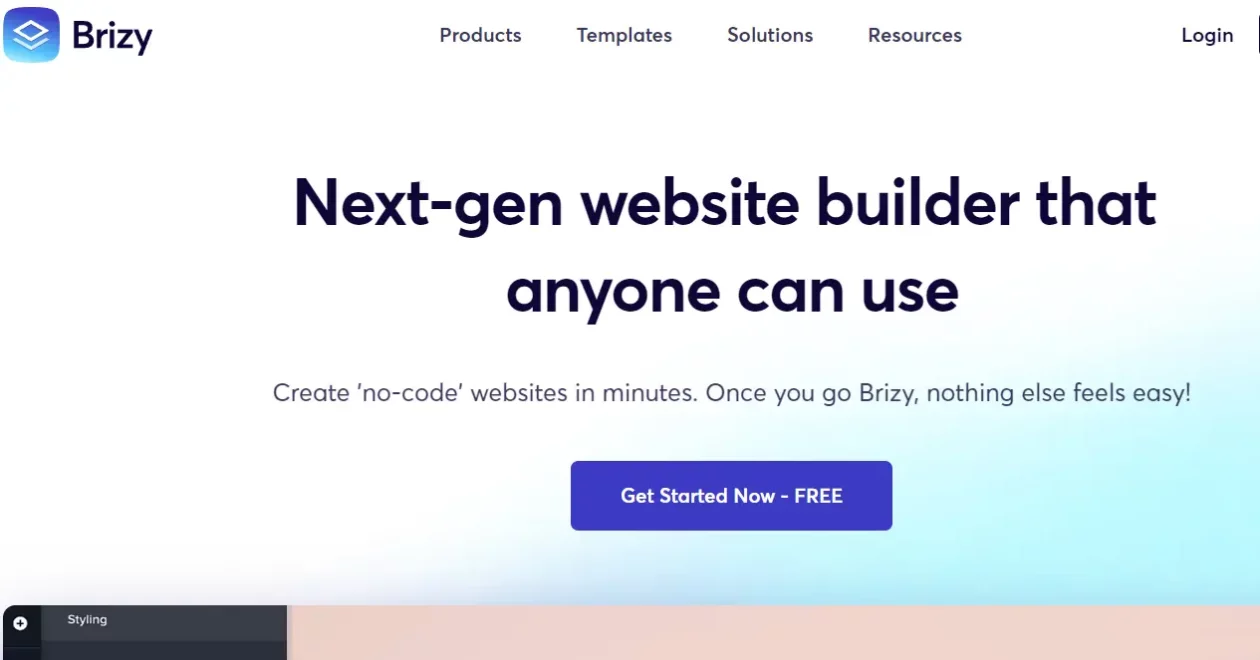
Brizy has a pleasant editor and a shrinking WordPress footprint: 70,000+ active installs on its WordPress.org listing, down from the numbers quoted in older roundups. The pricing page now leads with Brizy Cloud, a hosted platform sold from $19 a month, with the self-hosted WordPress plugin behind a secondary tab. That is a vendor telling you where its attention is going. Fine for a personal project; we would not start a five-year client site on it today.
How to choose in about a minute
- One site, you will maintain it, budget matters: Elementor Pro Essential, $60 a year.
- One site, a client will edit it: Elementor Pro again. Familiarity beats elegance when someone else is clicking.
- Several sites a year, you control the stack: Bricks Starter or Agency depending on count. Agency at $249 is the tier once you pass three sites, because Business caps there.
- Ten or more sites, licence cost dominates: Divi at $89 a year, or $249 once.
- You white-label and bill a retainer: Beaver Builder.
- You want it lean, one-time, and you write CSS: Oxygen at $129.
- You want lean output but a locked renewal price: Breakdance Pro Unlimited at $199.99 a year.
- You only need a few marketing pages: skip all of this and look at landing page plugins or a set of Gutenberg block plugins instead.
One warning that applies to all eight lines. Builders are not portable. Layouts live in each vendor’s own format, so leaving means rebuilding the pages by hand. Choose for where you expect to be in five years, not for this month’s price.
Frequently Asked Questions
Which WordPress page builder is cheapest?
Elementor Pro Essential, at $60 a year for one site, is the lowest annual entry price of the six compared here. Divi is cheaper per site as soon as you run more than one, at $89 a year for unlimited installs. Oxygen’s $129 one-time licence beats both if the site lives past two years.
Do page builders slow down WordPress?
They add CSS and JavaScript your theme did not need, so yes, a little. How much depends far more on your host, your images and your other plugins than on which builder you picked. Measure it rather than guessing: Google’s thresholds are 2.5s LCP, 200ms INP and 0.1 CLS.
Can I switch page builders later?
Not cleanly. Each builder stores layouts in its own format, so deactivating one leaves shortcode residue or empty wrapper divs behind and the page has to be rebuilt by hand. That is the strongest argument for choosing a builder you can live with for five years rather than the cheapest one today.
Is Bricks better than Elementor?
They solve different problems. Bricks ships as a theme with the builder inside it, so there is no separate theme stylesheet to fight. Elementor is a plugin with more than 10 million active installs, which buys you tutorials, add-ons and contractors who already know it. Bricks costs $79 a year; Elementor Pro Essential costs $60.
Is a lifetime page builder licence worth buying?
Sometimes. Divi’s $249 lifetime pays for itself against the $89 annual in under three years. Bricks Ultimate at $599 needs roughly two and a half years at the $249 Agency rate, or more than seven at the $79 Starter rate. Oxygen is one-time only, from $129.
Do I still need a page builder at all?
Not always. The block editor plus a well-built theme covers blogs and simple brochure sites without any extra plugin. You need a builder when you want visual control over headers, footers, archives and single-post templates without writing PHP, or when a client will edit their own pages.
Which page builder is best for client work?
Beaver Builder or Bricks. Beaver Builder’s white-label option is the reason agencies stay on it after the licence stops being cheap. Bricks covers unlimited sites for $249 a year against Beaver Builder’s $546, which matters once you are maintaining a dozen client installs.
What happens if I let my licence lapse?
Your pages keep rendering and the site stays up. You lose updates, support and new features until you renew. Running an unmaintained builder on a public site is how sites get compromised, so treat a lapsed licence as a security problem rather than a cosmetic one.
Our call
Buy Bricks. At $79 a year for one site, or $249 for unlimited, you get a builder that is the theme rather than a layer bolted on top of one, and a full feature set on every tier including the cheapest. For anyone who builds WordPress sites for a living, that combination is worth more than a wider template library.
Buy Elementor Pro instead in one specific case: the site will not stay with you. At $60 a year it is the cheapest annual licence here, and the 10 million installs behind it mean documentation, add-ons and a replacement contractor all exist. That is worth more than a few kilobytes of markup when you are handing over the keys.
If you are running ten sites and the licence maths is the whole argument, Divi at $89 a year is still the cheapest unlimited-site subscription in this comparison, and the $249 lifetime settles it after under three years. Everything else on this page is a good tool aimed at someone more specific than you probably are.

[…] are already fighting Elementor’s weight. Compare alternatives in the page builders roundup before committing your whole blog to one builder’s templates. Migrating out later is a […]
[…] want file-based templates and version control. Elementor is the wrong tool. Our comparison of visual page builders covers the alternatives […]
[…] with images and buttons. WP Table Builder at $39/year, with the header-row option turned on. A page builder you already own may cover this […]
[…] Inline styles from a builder frequently survive both techniques; see the Elementor add-ons and page builder guides for how much of your styling lives outside the theme […]
[…] You build in a page builder already. Astra Pro’s add-on-only tier at $69/year, and pick your builder from our roundup of visual page builders for WordPress. […]